
On 4–5 March 2026, the ManuREfinery project was successfully presented at the
ManuREsource 2026 Conference in Wageningen, the Netherlands.
Through a dedicated poster presentation, project partners shared key technological
developments aimed at transforming manure into valuable bio-based products. The poster was
made by Colsen in collaboration with ISP-UVa (University of Valladolid), highlighting the
strong cooperation within the ManuREfinery consortium.
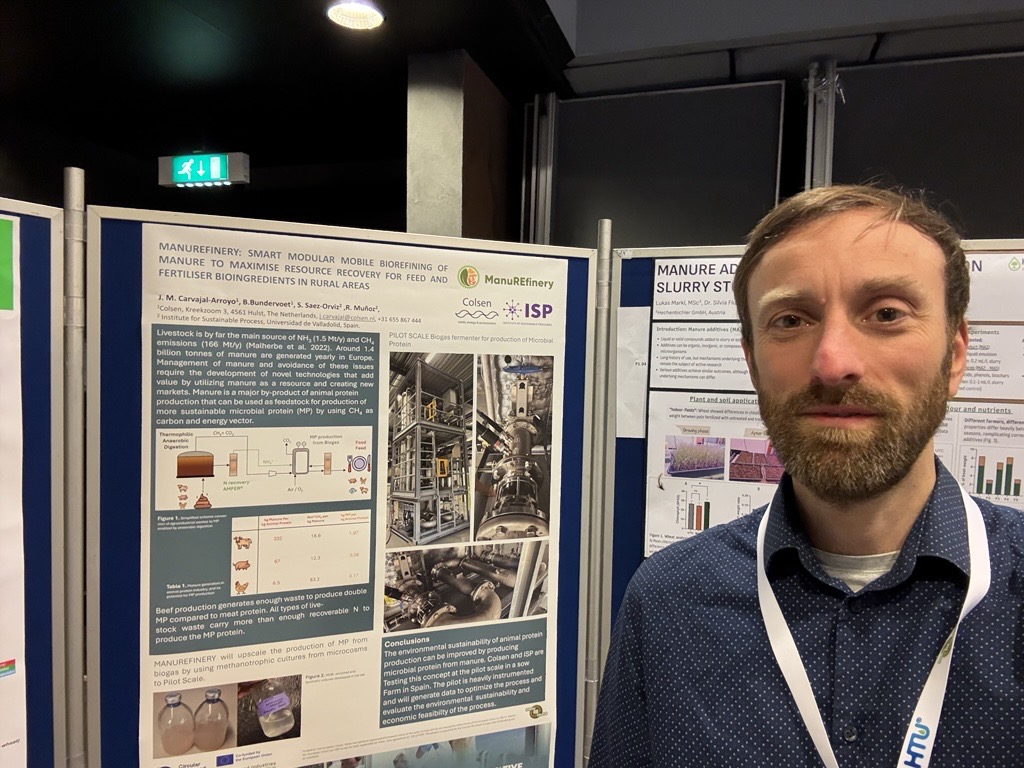
The poster presented ManuREfinery’s approach to converting manure into microbial protein
(MP)—a sustainable alternative for feed and fertiliser applications.
Livestock farming is a major source of greenhouse gas emissions, particularly ammonia (NH₃)
and methane (CH₄). At the same time, large volumes of manure are generated every year,
posing environmental and management challenges.
ManuREfinery addresses this by:
This approach supports the transition from waste management to resource recovery and
circular bioeconomy solutions.
A key highlight of the poster was the pilot-scale biogas fermenter system, currently being
tested to scale up microbial protein production.
The system:
This pilot phase will generate critical data to:
ManuREsource 2026 provided a valuable platform to exchange knowledge with experts working
on manure treatment, policy, and innovation.
By presenting these results, ManuREfinery:
ManuREsource is an international conference stimulating the exchange of experiences between
regions on the policy measures taken for coping with manure surpluses, both in terms of
manure management in a broad sense, and more specifically in terms of manure treatment.
It also aims to give an overview of the current developments and innovations in manure
treatment technologies and to explore valorisation strategies. That is why participation in
international conferences such as ManuREsource is essential for ensuring that research results
are shared, validated, and translated into real-world solutions.
Through its presence at ManuREsource 2026, ManuREfinery continues to support the
development of sustainable, circular approaches to agriculture, where waste streams
become valuable resources.